Want to be in the loop?
subscribe to
our notification
Business News
HCM CITY DEVELOPS NEW ECONOMIC ZONE FOR MARINE SECTOR
The special economic zone would help fully tap the potential of the area to meet the city's economic development, especially the sea economy.
Under a master plan to develop HCM City until 2020 with a vision to 2025, approved by the Prime Minister, the city will be developed in four directions: East, West, South and North, with a focus on the south and east where busy seaport and logistics activities take place.
The economy will be developed based on a service-industry-agriculture structure, with priority given to finance, insurance, trade, transport, warehousing, port services, postal and telecommunications, information technology, communications and real estate.
Le Hoang Quan, chairman of HCM City's People's Committee, said the special economic zone was a new model and one of the major projects to support the city's sustainable development for 2016-2020 with a vision to 2030.
The city needs an investment of about $470 billion in the next decade to implement the plan.
Seaport development
HCM City is also beginning to develop seaports to facilitate trade activities between the city and its neighbouring provinces.
The city is currently home to 38 seaports with a total length of nearly 13 kilometres, including Tan Cang – Cat Lai, Sai Gon, and Sai Gon Premiere Container Terminal (SPCT).
Quan said the city's seaports handled 109 million tonnes of cargo and generated over VND15 trillion ($705 million) last year, an annual rise of 15.3 per cent.
The outcomes were attributed to the city's investment in major transport infrastructure projects.
The completion of the second phase of the Soai Rap dredging project is an example.
The project worth VND2.8 trillion ($131.5 million) was commissioned in late June 2014, enabling faster navigation and handling of 30,000-50,000 dead weight tonnage ships.
Total volume of goods transported via the river in 2014 reached 7.2 million tonnes, a year-on-year rise of 16 per cent.
The Sai Gon New Port company manages 16 ports, including two inland container depots from the south to the north.
The Cat Lai Port in District 2 is listed among the top 34 large, modern container ports in the world.
According to the national seaport development plan through 2020, HCM City is the southeast region's key port with functional wharf areas of Hiep Phuoc on Soai Rap River and Cat Lai on Dong Nai River.
The region's seaports are expected to handle 185-200 million tonnes of cargo in 2015, 265-305 million tonnes in 2020, and 495-650 million tonnes in 2030.
Le Hoang Minh, deputy director of the city's Department of Transport, said the city was relocating Sai Gon New Port, Ba Son shipyard, Nha Rong-Khanh Hoi Port, Vegetable port and Tan Thuan Dong Port on the Saigon River.
The city is planning 2,000 hectares for the construction of the Hiep Phuoc urban industrial complex along the Soai Rap River which could welcome 50,000-70,000 dead weight tonnage ships from the East Sea to the Hiep Phuoc seaports cluster.
This would reduced transport time and increase goods exchanges between the city and Mekong Delta as well as other industrial hubs in the southeast region.
In addition to investing in developing the seaports system in Cat Lai and Hiep Phuoc regions, the city is focusing on connecting land and waterway transport networks such as belt roads that connect the city with Hiep Phuoc Port and Industrial Park, the HCM City-Long Thanh-Dau Giay Highway, and the Ben Luc-Long Thanh Highway.
The city will also build a railway connecting Hiep Phuoc Port with Long Dinh station in Can Duoc District and Long An International Port in Can Giuoc District.
Source: VNS
Related News
MEMBER CORNER / PROMOTIONS
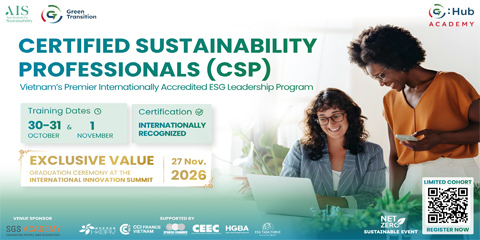
HCMC | CERTIFIED SUSTAINABILITY PROFESSIONAL (CSP) TRAINING | REGISTRATION OPEN
As sustainability becomes deeply embedded in corporate strategy and supply-chain operations across Vietnam, Hong Kong Business Association Vietnam is pleased to endorse the upcoming Certified Sustainability Professional (CSP) training program by the Asia Institute for Sustainability (AIS) - a premier internationally recognized ESG credential in Vietnam.
VIETNAM ECONOMY INVESTMENT
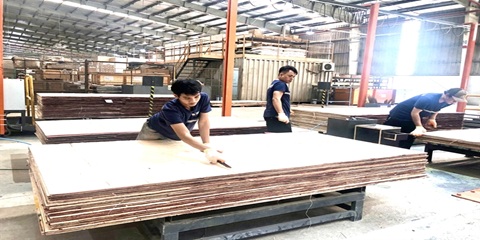
HCM CITY SAYS HOW IT PLANS TO ACHIEVE 10-11% ANNUAL EXPORT GROWTH FOR REST OF DECADE
The southern economic hub aims to strengthen its role as the country’s largest import-export centre while developing into a regional transhipment centre in Southeast Asia, supported by green and digital transformation and a circular economy. HCM City has outlined measures to expand production capacity, cut logistics costs, diversify export markets, and help businesses meet increasingly stringent international standards as it targets average annual export growth of 10-11 per cent through 2030.
VIETNAM ECONOMY INVESTMENT
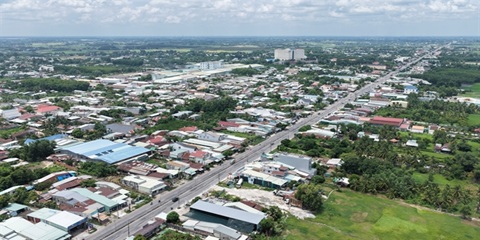
HCM CITY LEADS ECONOMIC RESTRUCTURING IN SOUTHEAST REGION
According to Associate Professor, Dr Vũ Tuấn Hưng, director of the Institute of Social Sciences of the Southern Region, the Southeast is a strategically important socio-economic space in Việt Nam’s development given its advantages in location, industry, trade, services, logistics, science and technology, urbanisation and human resources.
TECHNOLOGY
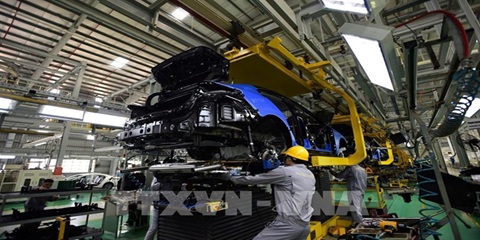
DIGITAL TRANSFORMATION TURNED INTO PRACTICAL TOOLS FOR PEOPLE, BUSINESSES
Việt Nam is moving its digital transformation agenda beyond policy frameworks and individual technology platforms towards practical applications that address everyday needs, as authorities seek measurable outcomes from science, technology and innovation. Under Politburo Resolution No. 57-NQ/TW issued on December 22, 2024, the implementation is increasingly shifting from simply completing assigned tasks towards developing concrete products and services for citizens and businesses.
TECHNOLOGY
APPLYING TECHNOLOGY FOR ECONOMIC TRANSFORMATION
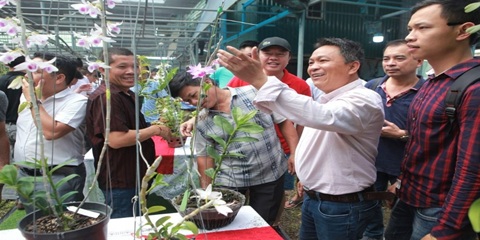
Having completed its new rural development program, Hanoi is shifting its focus toward improving development quality and building smart, sustainable rural areas. The transformation of Dong La orchid-growing village in An Khanh, a western commune of Hanoi, shows how digital technology is becoming a driver of production, market expansion, and higher incomes for local residents.
MEMBER CORNER / PROMOTIONS
VIGLACERA HONORED AS THE "LEADING GREEN INDUSTRIAL REAL ESTATE DEVELOPER 2026"
Organized by the Vietnam Investment Review, this prestigious awards program recognizes industry pioneers advancing eco-industrial parks, clean energy transition, and rigorous ESG standards. Outperforming competitors through a rigorous evaluation, Viglacera Corporation – JSC proudly ranked among the Top 5 highest-positioned enterprises in the Leading Green Industrial Real Estate Developers 2026 category, reinforcing its premier position in Vietnam’s industrial real estate sector.
Events Sponsors






















